HHS Launches Referral Pipeline to Unregulated Pregnancy Clinics
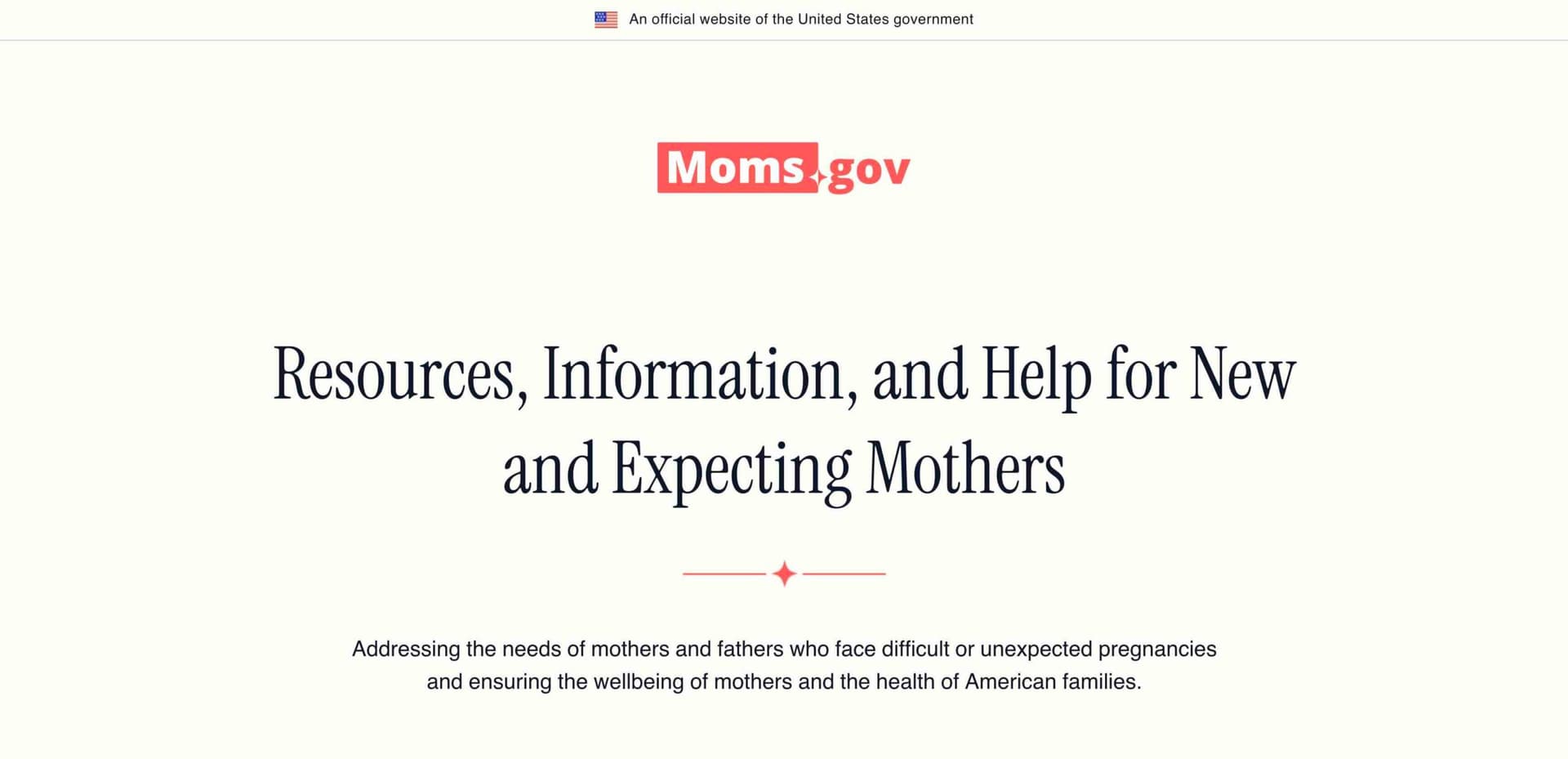
WASHINGTON, DC – Earlier today, President Trump and others in his administration offered comments from the Oval Office about the launch of “Moms.gov”. The site, which quietly went live on Mother’s Day, presents pregnant women with two seemingly equivalent options for care and support: Federally Qualified Health Centers — which operate under extensive federal oversight, medical licensing requirements, HIPAA obligations, quality standards, and clinical accountability systems — and “pregnancy centers” – which do not appear to be subject to the same oversight. The “pregnancy centers” button directs users to Option Line, an unregulated pregnancy clinic (UPC) referral network operated by Heartbeat International, a national conservative advocacy organization.
That framing is alarming coming from the federal agency responsible for protecting patient safety and healthcare standards, particularly because many UPCs present themselves as medical clinics while operating outside the oversight governing other healthcare providers. Women may not realize these centers may not be HIPAA-covered entities and may not provide comprehensive, evidence-based reproductive and maternal healthcare.
While it notes that it links to an “external site” that “should be carefully considered,” HHS does not clearly disclose that this federal resource routes to an ideological political advocacy network. Heartbeat International explicitly requires affiliates to oppose abortion, abortifacients, and contraception and describes its network as a Christian ministry dedicated to providing “alternatives to abortion.”
The structure and language of Moms.gov appears designed to target financially vulnerable women. By emphasizing “free” services, material assistance, and low-cost care options, the site appears aimed at women who are low-income, uninsured, underinsured, young, or otherwise facing barriers to accessing healthcare. Those populations are already more vulnerable to delayed prenatal care, medical misinformation, and gaps in healthcare access.
Additionally, the way HHS presents UPCs on Moms.gov creates many concerns:
-
HHS’ Moms.gov fails to disclose that many UPCs are not HIPAA-covered entities. The guidance directs women to organizations that may operate outside the federal medical privacy framework without clearly informing patients that their sensitive health information may not be protected under HIPAA, according to HHS’s own legal review.
-
HHS presents UPCs alongside Federally Qualified Health Centers in ways that imply comparable medical oversight. Unlike FQHCs, which operate under extensive federal oversight, licensing requirements, credentialing standards, malpractice accountability, and evidence-based care obligations, many UPCs function outside those regulatory systems. Many UPCs are not subject to routine inspections, adverse event reporting requirements, infection-control standards, or formal quality assurance systems. At UPCs, it is unclear if patients are given information about whether medical directors are on-site, interact with patients directly, or supervise ultrasound services in a clinically meaningful way.
-
References to “medical services” obscure critical patient-safety distinctions. By emphasizing ultrasounds, STI testing, and “medical services” without clarifying the limited oversight governing many UPCs, HHS increases the likelihood that patients will mistake them for standard medical facilities.
-
HHS directs women to “ultrasounds” at UPCs without disclosing that UPCs claim their ultrasounds are “limited” and/or “non-diagnostic.” Patients may incorrectly assume the ultrasound they receive at a UPC constitutes a diagnostic medical evaluation for pregnancy-related conditions or other health concerns, but many UPC websites characterize their ultrasounds as informational or “confirmation” scans rather than diagnostic procedures. National UPC training conferences have included guidance suggesting centers avoid serving women presenting with medical complications, raising additional concerns about whether patients understand the clinical limitations of the services being provided.
-
HHS ignores the risk of delayed or missed medical care. Promoting organizations unequipped to diagnose or manage medical emergencies increases the risk that women delay access to licensed prenatal care, emergency treatment, contraception, or abortion care.
HHS should be helping patients understand the difference between regulated healthcare providers and unregulated ideological organizations. Instead, this guidance blurs those lines in ways that create confusion, undermine informed consent, and increase the risk of preventable harm.